An open outreach proposal from 1Gaea
Most people try to recycle correctly. Most cities try to run recycling programs responsibly.
Yet despite decades of effort, plastic recycling outcomes remain poor, and landfill disposal continues to rise. This proposal does not attempt to explain every reason why recycling has struggled over the past 50 years.
The proposal
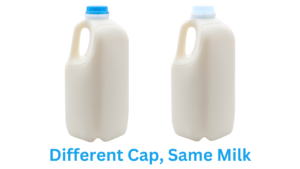
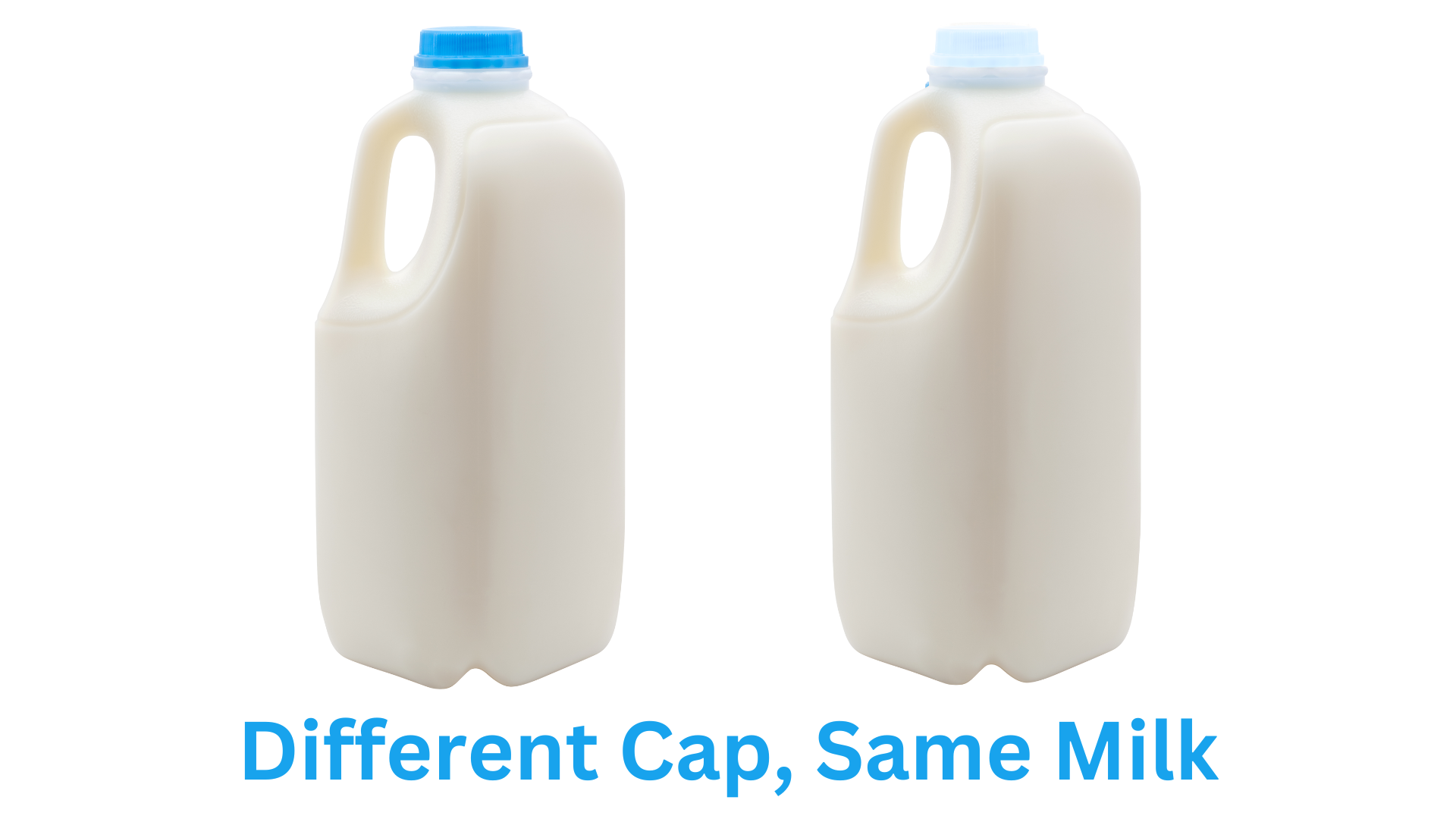
Advance the movement for plastic jugs and bottles to use caps that match the container color.
- Natural or white HDPE jugs → natural or white HDPE caps
- Clear PET bottles → clear PET caps
No change to:
- Consumer behavior
- Collection systems
- Municipal recycling machinery
- Product form factors
This is a spec decision, not a technological leap.
Why caps matter at all
Most plastic jugs and bottles are made from light-colored plastic because it has higher reuse value after recycling.
The caps are usually made from the same type of plastic, but they are often dyed blue, green, red, or black for branding reasons.
During recycling, containers and caps are shredded and melted together.
When that happens:
- The colored pigment from the caps spreads through the entire batch
- The recycled plastic becomes darker or tinted
- The entire batch can no longer be used for higher-value applications
In short: a small amount of color can downgrade a large amount of material.
Multiply this loss across billions of containers per year, and the total impact is no longer marginal.
Why this becomes a system problem
Recycling systems operate at massive scale. Billions of containers move through them each year.
When material value is reduced:
- Recyclers earn less per pound
- Lower-value uses become the norm
- Investment in better recovery equipment becomes harder to justify
- At very low material values, some lots become unsellable and are diverted from recycling to landfill.
This is not because people recycled incorrectly. It is because design details compound when repeated billions of times.
Would consumers notice or care?
For most products, purchasing decisions are driven by:
- The brand
- The label
- The container shape
- Price and availability
Cap color plays a minimal role.
The question is not whether a white cap is better looking than a green one. The question is whether a minor visual change is acceptable if it improves recycling outcomes at scale.
Why this is realistic
- Cap color is already a manufacturing specification
- Switching pigments does not require new molds or new materials
- No consumer education campaign is needed
- No new sorting rules are introduced
This requires no re-education, no capital investment. Some persuading yes, but a small change with a huge benefit.
Why start with something this small
Large environmental problems are often discussed only in large, abstract terms.
But systems also improve through:
- Pilot programs
- Incremental standards
- Low-risk changes that can be tested quickly
One successful implementation provides more evidence than years of debate.
An open invitation
This proposal is offered to:
- Product teams
- Packaging engineers
- Retailers
- Sustainability leads
- Regulators exploring practical standards
If you are looking for a low-risk, defensible change that does not depend on perfect consumer behavior, this is one worth evaluating.
Closing thought
You can make a difference for the planet. Your children will thank you. No government approval needed. We can start one cap at a time.
— 1Gaea